There was a time when competitive advantage was relatively easy to explain.
If you manufactured products more efficiently than your competitors, you won. If your distribution network reached more customers, you won. If you had proprietary technology, exclusive access to capital or a stronger brand, you won. Every era had its defining asset, and strategy was largely about acquiring more of it than everyone else.
Today's business environment feels fundamentally different.
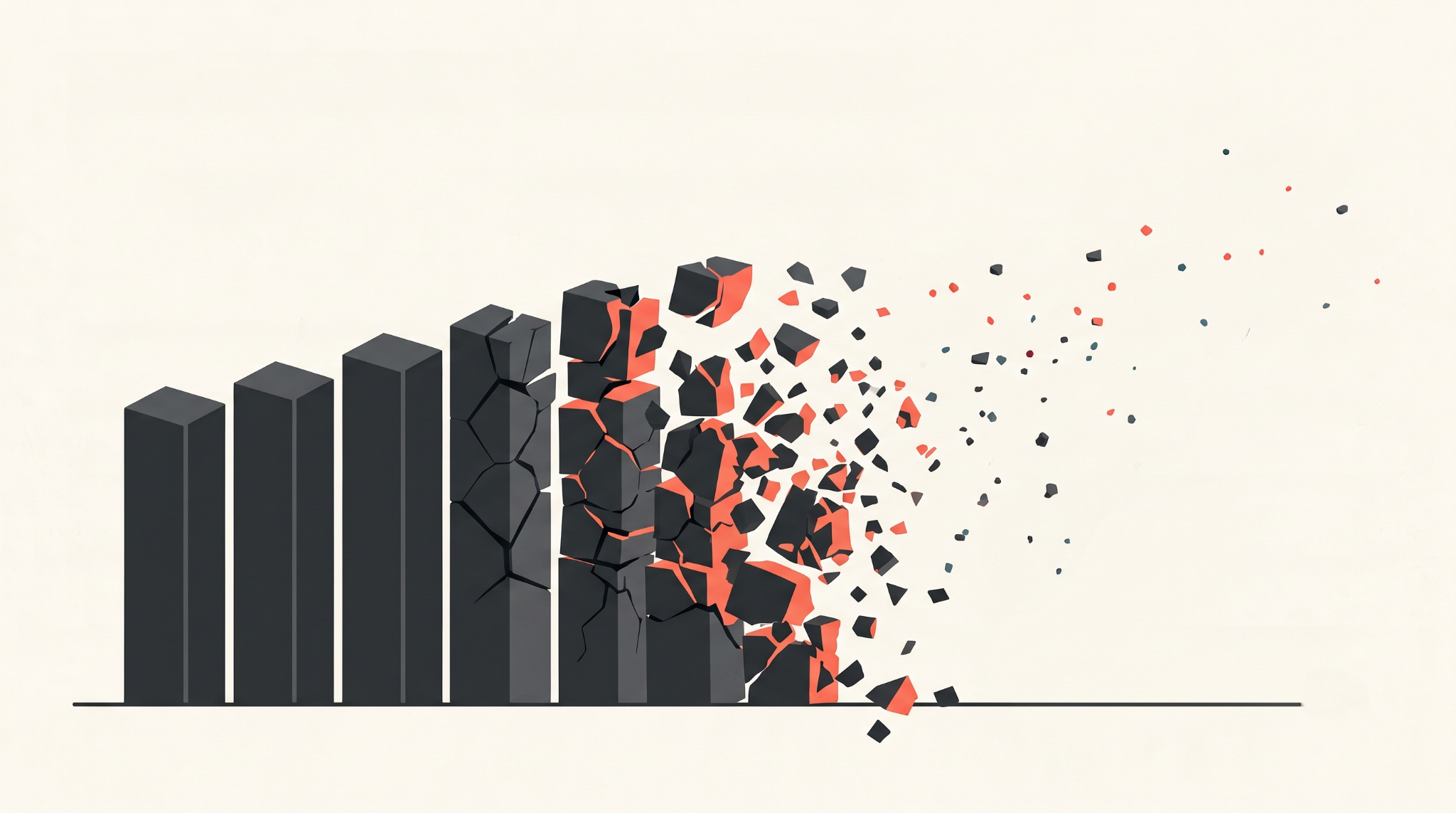
Almost every meaningful advantage appears to be shrinking in duration.
Technology diffuses faster than ever. Business models are copied within months. Distribution has become democratised through digital platforms. Access to talent is increasingly global. Even intellectual property, while still valuable, rarely guarantees long-term protection in the way it once did.
The half-life of competitive advantage continues to decline.
Yet amid all this acceleration, one asset seems to behave very differently.
Trust compounds.
Unlike technology, trust does not become obsolete every eighteen months. Unlike software, it cannot simply be replicated by competitors with sufficient investment. Unlike capital, it cannot be deployed overnight.
It accumulates slowly, often invisibly, through thousands of interactions that appear insignificant in isolation but become extraordinarily valuable over time.
I don't think we appreciate this enough because trust rarely appears on a balance sheet.
Finance measures cash flow. Marketing measures customer acquisition. Sales measures pipeline. Operations measure efficiency. Trust quietly influences all of them while remaining almost impossible to quantify.
Perhaps that is why many organisations systematically underinvest in it.
When businesses discuss trust, they often reduce it to branding or reputation management. Those are certainly related, but they are incomplete.
Trust is ultimately an economic variable.
It determines whether customers give you a second chance after a mistake. It determines whether employees remain during difficult periods. It determines whether investors continue backing management when quarterly numbers disappoint. It determines whether partners share opportunities that never become public.
The financial consequences of trust are enormous, even if accounting systems struggle to capture them.
My appreciation for this grew gradually rather than through any single defining moment.
Throughout my career, I have watched technically superior products lose to companies whose primary advantage appeared to be credibility. I have seen customers remain astonishingly loyal despite occasional operational failures because they believed management would ultimately do the right thing. Conversely, I have seen organisations with exceptional products steadily erode customer confidence through small decisions that individually seemed insignificant but collectively communicated something much more damaging.
Trust is rarely destroyed by one catastrophic event.
More often, it erodes through accumulated inconsistency.
Promises are made casually. Emails go unanswered. Small commitments are missed. Difficult conversations are postponed. Customers begin sensing that words and actions no longer align.
Eventually, confidence disappears long before revenue reflects the damage.
This dynamic becomes even more interesting when viewed through the lens of artificial intelligence.
Most current discussions focus on how AI reduces the cost of producing knowledge work. Marketing campaigns can be generated in minutes. Research that once consumed weeks can be completed in hours. Software development becomes increasingly efficient. Customer support scales without proportional increases in headcount.
These developments are extraordinary.
But they also create an unintended consequence.
As competence becomes increasingly accessible, it becomes increasingly difficult to compete on competence alone.
If every consulting firm produces polished presentations, presentations stop differentiating firms. If every software company writes competent code, code itself becomes less of a moat. If every sales team uses AI to prepare personalised outreach, personalised outreach eventually becomes expected rather than exceptional.
Businesses naturally search for the next source of differentiation.
I believe many of them will rediscover trust.
Imagine two companies selling nearly identical products powered by comparable AI capabilities.
One organisation consistently communicates honestly when things go wrong. Its executives admit mistakes quickly. Customers believe pricing is transparent. Employees feel comfortable challenging decisions. Partners know commitments will be honoured even when circumstances change.
The second organisation possesses equally capable technology but develops a reputation for exaggeration, opacity and short-term thinking.
Which company would you rather build your business around?
Which one would you recommend to a colleague?
Which one would attract stronger employees?
Which one would receive greater patience during inevitable setbacks?
The answer has remarkably little to do with technology.
It has almost everything to do with confidence.
History repeatedly shows that markets reward trust because trust reduces friction.
Negotiations become shorter. Decision cycles accelerate. Customers require less persuasion. Employees spend less time protecting themselves politically.
Organisations move faster not because they work harder but because fewer interactions require defensive behaviour.
Stephen Covey famously argued that trust is a dividend rather than merely a virtue. At the time, many people interpreted that idea primarily as a leadership principle.
Increasingly, I think it is becoming a competitive strategy.
Artificial intelligence is reducing the cost of producing answers.
It is not reducing the value of believing the person giving them.
That distinction may define the next decade of business.
The winners of the AI era will undoubtedly build remarkable technology. They will automate intelligently, analyse data more effectively and improve productivity in ways we are only beginning to imagine.
But I suspect their most enduring advantage will be something far older than artificial intelligence.
They will become organisations whose customers, employees and partners trust them to use that intelligence wisely.
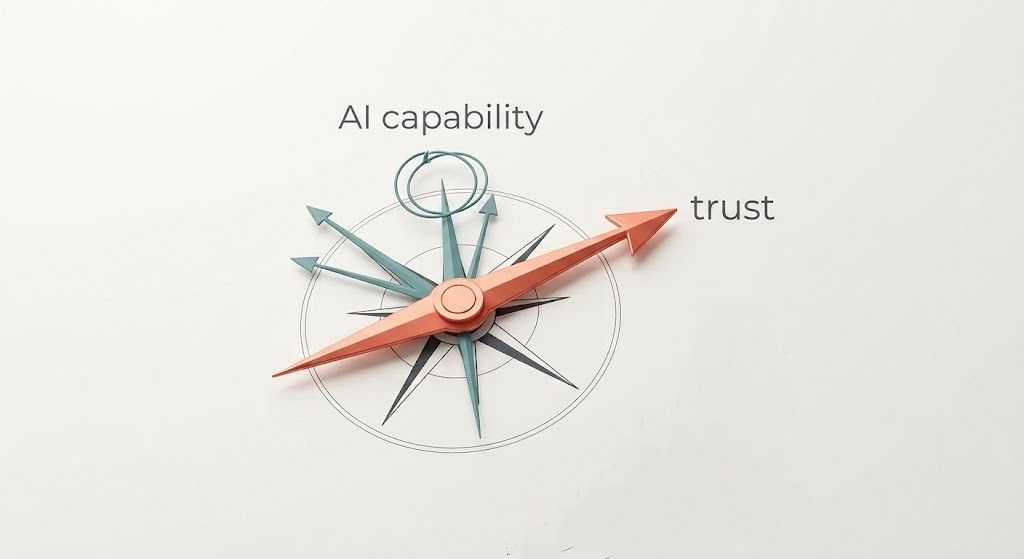
Technology creates capability.
Trust creates permission.
In the long run, permission has always been harder to earn.