There is a sentence that appears in almost every annual report, every leadership offsite and every corporate values deck.
"Our people are our greatest asset."
It has become so common that most of us barely notice it anymore. It sits somewhere between "customer first" and "innovation matters" — a phrase that sounds undeniably true while demanding very little of the organisation saying it.

I have never had a problem with the statement itself. I have a problem with the fact that most companies stop there.
If people are genuinely your greatest asset, then almost every major decision a company makes should reflect that belief. Hiring should be the single most important capability. Managers should be promoted primarily because they develop people well. Internal communication should be treated as a strategic function rather than an administrative one. Performance reviews should improve judgement instead of merely measuring output. Leaders should spend more time thinking about trust than they spend thinking about process.
Instead, most organisations do the opposite.
They spend millions optimising technology stacks while expecting managers to learn leadership through trial and error. They invest heavily in sales enablement but almost nothing in helping teams make better decisions. They measure productivity with remarkable precision while treating culture as something too intangible to improve systematically.
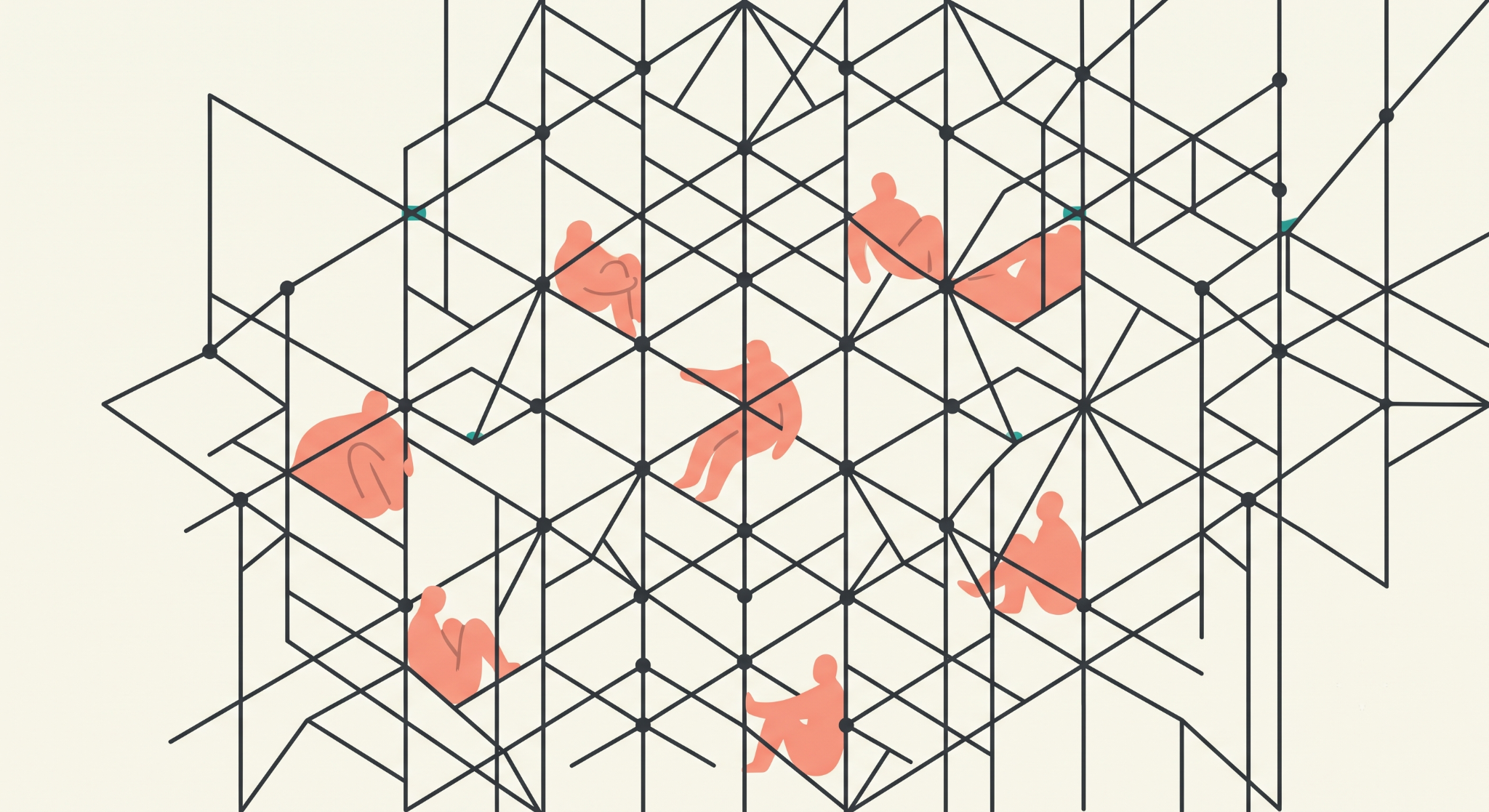
In other words, they declare that people matter most while behaving as though systems matter more.
The irony is that this contradiction remained hidden for years because technology itself created enough competitive advantage to compensate for mediocre management. Companies could outgrow leadership problems. Strong products masked weak communication. Expanding markets covered up organisational inefficiencies. It was entirely possible to build valuable businesses without becoming particularly good at developing people because other advantages were large enough to outweigh that weakness.
Artificial intelligence is changing that equation.
Most discussions around AI focus on automation. Which jobs will disappear? Which tasks will become faster? Which functions will require fewer people? Those conversations are understandable, but I suspect they are distracting us from a much more consequential shift.
AI is rapidly reducing the value of many forms of technical execution.
Writing competent marketing copy is becoming easier.
Producing presentations is becoming easier.
Analysing large datasets is becoming easier.
Writing software is becoming easier.
Research that previously required days now takes hours.
Every month, another category of knowledge work becomes more accessible.

The obvious conclusion is that companies will need fewer people.
I think the opposite may prove true.
They will need better leaders.
Technology has always had an interesting habit. It raises the value of whatever it cannot replace.
When spreadsheets became ubiquitous, accountants did not disappear. The accountants who understood businesses rather than merely bookkeeping became more valuable.
When search engines made information universally accessible, expertise did not vanish. Expertise evolved from possessing information to interpreting it.
AI is likely to follow the same pattern.
As execution becomes increasingly commoditised, the limiting factor inside organisations shifts somewhere else. Increasingly, it shifts towards the quality of human coordination.
How effectively do teams make decisions?
How quickly do they build trust?
Can people disagree without damaging relationships?
Do employees understand why decisions are made, or merely what has been decided?
Can managers recognise potential before it appears on a performance dashboard?
These questions have always mattered. They simply become impossible to ignore when technology removes other sources of differentiation.
One of the more interesting patterns I have observed while working with growing organisations is that companies rarely fail because they lack intelligent employees. Most modern businesses are full of capable, well-educated people. They fail because intelligent people begin operating without shared context.
One team optimises for growth.
Another optimises for profitability.
A third optimises for customer satisfaction.
Individually, every decision appears rational.
Collectively, the organisation slowly pulls itself apart.

No amount of artificial intelligence solves that problem because it is not fundamentally an information problem. It is a leadership problem.
Leadership, despite everything written about it, is ultimately the practice of creating shared understanding. It is helping hundreds or thousands of individuals make independent decisions that still move in the same direction. That requires communication, judgement, credibility and trust far more than it requires charisma.
Unfortunately, those capabilities are extraordinarily difficult to measure.
Revenue appears on a dashboard. Employee trust does not.
Cycle time has a metric. Managerial judgement does not.
Customer acquisition cost can be calculated to the decimal. Organisational confidence cannot.
Because these qualities resist measurement, they are often neglected until they become painfully visible through their absence.
This is where I think the next generation of exceptional companies will distinguish themselves.
Not because they possess proprietary AI models.
Not because they automate more workflows than everyone else.
But because they recognise that technology changes the economics of execution while leadership determines the economics of coordination.
The more capable AI becomes, the less interesting it is to ask whether a task can be automated.
The more important question becomes whether an organisation has built an environment where talented people consistently make better decisions together than they could individually.
That has never been a software problem.
It remains a profoundly human one.
Perhaps that is why I have become increasingly sceptical whenever I hear leaders describe AI as a substitute for people. Technology has always been remarkably effective at amplifying human capability. It has been far less successful at replacing the conditions under which humans perform at their best.
The companies that dominate the next decade will undoubtedly use extraordinary technology.
I have very little doubt about that.
The more interesting question is whether they will finally begin treating people as their greatest asset — not because it sounds good in a shareholder letter, but because the economics of the AI era will leave them with no alternative.